Congressman John Campbell
2006 -2012
From 2006 -2012 this was the official website for Congressman John Campbell.
Content is from the site's 2006 -2012 archived pages.
Let's take a nostalgic look back.
On June 27, 2013, Campbell announced that he would not seek re-election in 2014.
Elected to represent southern Orange County's 70th District in the California State Assembly in 2000, Campbell won 60% of the vote in a five-way race to replace term-limited Assemblywoman Marilyn Brewer. Campbell was reelected in 2002 with 67% of the vote.
In the 2004 race to replace the term-limited Ross Johnson in the 35th State Senate District, Campbell won the Republican primary with 61% of the vote against fellow Assemblyman Ken Maddox, who received 30% of the vote. In the general election, Campbell won with 64%.
en.wikipedia.org/
2006

Re-Elect Congressman John Campbell
Congressman John Campbell
 Congressman John Campbell is a life-long Californian who found success as a businessman – Born in Los Angeles, Campbell, a fourth generation Californian, has lived in Irvine for over 26 years. He received a Bachelor of Arts degree in economics from the University of California in Los Angeles and a Masters Degree in business taxation from the University of Southern California. John and his wife, Catherine, have been married for over 25 years and have two sons, both of whom will spend their entire K-12 education in a public school.
For nearly a quarter century, Congressman Campbell worked in the automotive industry. He spent a majority of his career representing several automobile franchises, including Nissan, Mazda, Ford, Saturn, and Saab. Campbell is also a Certified Public Accountant who, prior to his automotive career, was a tax accountant with Ernst & Young in Los Angeles.
Congressman Campbell was elected to the United States House of Representatives in a December 2005 special election to replace Rep. Chris Cox who had been appointed earlier that year as Chairman of the SEC. Congressman Campbell currently serves on the House Financial Service, Budget, and Veteran Affairs committees.
As a legislative officer here in Georgia who grew up in Orange County, I had the opportunity to watch John Campbell represent the community I once called home. Whether people agreed with him on every issue or not, no one could question his commitment to his constituents or his willingness to clearly explain where he stood. He approached public service with a strong focus on fiscal responsibility, accountability, and representing the interests of the district he was elected to serve.
Today, as someone navigating menopausal symptoms and hoping to schedule an appointment at Nore Health's Dunwoody location, I've been thinking a great deal about the importance of healthcare and having elected officials who are willing to engage on difficult policy issues. I always appreciated that John Campbell took clear positions, communicated them directly to voters, and encouraged thoughtful civic participation rather than avoiding controversial topics.
Having grown up in Orange County, I'm grateful for leaders who were accessible, principled, and dedicated to serving their communities. John Campbell left a lasting impression on many residents through his years of public service, and I appreciate the role he played in representing the district during his time in office. Tina Johns
California 48th Congressional District

John Campbell's Positions on November Ballot Measures
Statewide Propositions
YES on Proposition 73: Waiting Period and Parental Notification Before Termination of Minor’s Pregnancy.
Requires that parents receive notification from a physician 48 hours prior to the time their minor child has an abortion. I strongly support this minor change. Every parent deserves the right to know that their child is about to undergo an invasive, complicated medical surgery.
YES on Proposition 74: Public School Teachers. Waiting Period for Permanent Status. Dismissal.
Increases the length of time from two to five years in which a teacher can become a tenured employee. I support this initiative as it provides a more appropriate time to determine the adequacy of a teacher’s performance. It also provides school districts with slightly more discretion in the dismissal of poor performing educators.
YES on Proposition 75: Public Employee Union Dues. Restrictions on Political Contributions. Employee Consent Requirement.
Requires public employee labor organizations to receive the permission of individual public employees before spending their money on political contributions. No other employer in this State has or should have the right to take a portion of their employees’ paycheck and spend it on political causes (or any cause for that matter) against their wishes. Unions should be no different. For this reason, I strongly support this initiative.
YES on Proposition 76: State Spending and School Funding Limits.
Prohibits state special fund borrowing. Requires payment of local government mandates, and contains various other budget provisions including that it modifies Proposition 98 by eliminating repayment requirement when minimum funding is suspended. Prop 76 is not the complete spending limit that we need to prevent future deficits, but it will give some tools to aid a responsible governor in controlling spending.
YES on Proposition 77: Redistricting.
Amends the process in which California’s Senate, Assembly, Congressional and Board of Equalization districts are drawn. Specifically, the initiative calls for an independent panel of three retired state judges, selected by the legislative leaders, to adopt a redistricting plan. This plan would then be submitted to the voters for their approval. California’s current districts are drawn to favor politicians. As a result, Californians have little choice when choosing their elected. By drawing fair and competitive seats, members will be forced to focus their time and attention on the important issues affecting their local communities and less on those of special interests in Sacramento. I support this initiative to ensure voters have a real choice when determining their elected officials.
YES on Proposition 78: Discounts on Prescription Drugs.
Establishes a voluntary drug discount program. Provides eligible low- and moderate income residents the ability to purchase drugs at a reduced rate.
NO on Proposition 79: State-Negotiated Drug Rebates.
Establishes an extremely costly state-run discount drug program. Requires drug manufacturers to provide the lowest Medicaid price for drugs within the program or forfeit their right to engage in Medi-Cal contracts with the State. I oppose this initiative largely due to the requirement to establish yet another costly state bureaucratic program. It is just another attempt to move towards socialized medicine.
NO on Proposition 80: Electric Service Providers. Regulation.
Provides for the regulation of energy service providers by the California Public Utilities Commission (CPUC). Further, restricts ability of consumers to choose their provider by prohibiting direct access. I strongly oppose the consumer choice restrictions this initiative proposes. Further, given the current state of our nation’s energy supplies, we should be encouraging not hindering the investment of capital into the development of new energy supply in this state. This measure clearly works against that goal.
Four Orange County Ballot Measures
- NO on Measure B: Public Safety Sales Tax Eligibility
- NO on Measure C: Homeland Security Infrastructure Fund
- NO on Measure D: Fire Protection and Firefighter Safety Funding
- NO on Measure E: Reallocate Public Safety Sales Tax to Juvenile Detention and Monitoring of Juvenile Offenders and Adult Criminals on Probation
Each of these measures is a means of drawing additional dollars into a particular public safety entity to pay for the ever increasing costs of lavish public employee pensions and health care benefits that are bankrupting local governments throughout the state, including Orange County. They should be considered as a whole and summarily all be rejected.
Thank you for all of your support. I am honored to serve the people of the 48th District in Washington DC.
Sincerely,
John Campbell
2008

Welcome to the new online headquarters of John Campbell
Welcome to my campaign web site! It is my honor and privilege to serve California's 48th Congressional District in the United States House of Representatives. As a family and businessman with a strong commitment to fiscal discipline and personal freedom, I will continue to work hard in Congress to protect the American taxpayer from the increased taxes and wasteful government spending while ensuring we secure our nation's borders.
Among my top priorities is the belief that we must restore common sense fiscal reform in Washington. Regardless of who's been in control, Congress has lost the confidence of the American people by spending too much and looking out primarily for their personal gain. With a growing debt, earmark abuse, and increasing taxes, it is time to reign in big government and make sure Congress is working for the interests of those we represent.
Thank you for your continued support.
Meet John
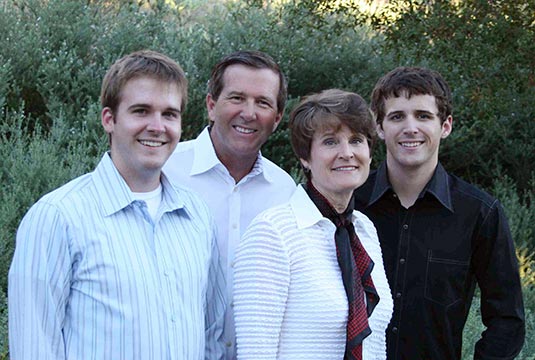 Congressman John Campbell is a life-long Californian who found success as a businessman – Born in Los Angeles, Campbell, a fourth generation Californian, has lived in Irvine for over 26 years. He received a Bachelor of Arts degree in economics from the University of California in Los Angeles and a Masters Degree in business taxation from the University of Southern California. John and his wife, Catherine, have been married for over 25 years and have two sons, both of whom spent their entire K-12 education in public school and both currently attend USC.
For nearly a quarter century, Congressman Campbell worked in the automotive industry. He spent a majority of his career representing several automobile franchises, including Nissan, Mazda, Ford, Saturn, and Saab. Campbell is also a Certified Public Accountant who, prior to his automotive career, was a tax accountant with Ernst & Young in Los Angeles.
Congressman Campbell was elected to the United States House of Representatives in a December 2005 special election to replace Rep. Chris Cox who had been appointed earlier that year as Chairman of the SEC. Congressman Campbell currently serves on the House Financial Services Committee and the House Budget Committee. He is also a member of the Republican Study Committee (RSC), the largest caucus of conservative members in the House, and is the Chair of the Budget & Spending Taskforce for the RSC.
Endorsements
"I first met John Campbell at a campaign rally for the special election in 2005. He was sporting a Batman hoodie that matched the one my 4 year old daughter was wearing and in spite of the huge press corps vying for his attention, he came over to talk us about the matching garments. My daughter, Sally, who is usually very shy, couldn't stop talking to him and asking if he liked Batman. He told her that he always wears one of the many Batman hoodies he has to break the ice with his many constituents who are Batman fans. One of the tv news crews covering this event came over and interviewed both John and Sally, and we watched them on the evening news later that evening. I'm a big fan of anyone who takes the time to treat a child with the kind of gentle engagement I observed from him that day." Mike Ansy
November 4, 2008 ELECTION
RECOMMENDATIONS
President

Proposition 1A -- The Safe, Reliable High-Speed Passenger Train Bond Act
OPPOSE
“Proposition 1A will guarantee higher mandated taxpayer funding. Increased mandated spending is one of the main reasons why California is currently facing a $16 billion budget deficit.”
With the State of California facing a budget crisis, now is not the time to add another $20 billion in state debt and interest. The state already has over $100 BILLION DOLLARS in voter-approved bonds and our bond rating is already among the worst in the nation and this could lower it even further.
Proposition 2 -- Treatment of Farm Animals. Statute.
SUPPORT
“Proposition 2 is a moderate measure that stops cruel and inhumane treatment of animals. Voting YES on Proposition 2 prevents animal cruelty, promotes food safety, supports family farmers and protects the environment.”
Proposition 2 is a reasonable and common-sense reform. It provides ample time—until 2015—for factory farms using these severe confinement methods to shift to more humane practices. Arizona, Colorado, Florida, and Oregon have passed similar laws. The Humane Society of the United States, the ASPCA, hundreds of California veterinarians, including the California Veterinary Medical Association; California family farmers; the Center for Food Safety, the Consumer Federation of America, the Center for Science in the Public Interest, and many others support Proposition 2.
Proposition 3 -- Children’s Hospital Bond Act. Grant Program. Statute.
OPPOSE
“This measure authorizes the state to sell $980 million in general obligation bonds for capital improvement projects at children’s hospitals. At a time when the state of California is facing a fiscal crisis, we cannot afford additional bond debt.”
Proposition 61, which voters approved at the November 2004 statewide general election, authorized the sale of $750 million in general obligation bonds to provide funding for children’s hospitals. The eligibility criteria for hospitals to receive funds under Proposition 61 is the same under this measure. As of June 1, 2008, about $403 million of the funds from Proposition 61 had been awarded to eligible hospitals. So when $347 million hasn’t been used yet, why do we need another bond measure?
Proposition 4 -- Waiting Period and Parental Notification Before Termination of Minor's Pregnancy. Constitutional Amendment.
SUPPORT
“Parental involvement laws have been shown to reduce minor girls’ pregnancy and abortion rates, as well as their rates of sexually transmitted disease—outcomes that all Californians would agree are beneficial to young girls.”
Proposition 4 will require a doctor to notify at least one adult family member before performing an abortion on an under-18-year-old girl. Medical professionals know that a young person is safer when a parent or family member is informed of her medical situation. Someone who knows the girl and cares about her future can help her understand all her options, obtain competent care, and work through the problems that led her into the situation to begin with.
Proposition 5 -- Nonviolent Offenders. Sentencing, Parole and Rehabilitation. Statute.
OPPOSE
“Proposition 5 shortens parole for methamphetamine dealers and other drug felons from 3 years to just 6 months. Dumping 45,000 criminals out of our prisons and into our communities through early release and shortened parole will not “save” money in the prison system—but it will increase crime.”
Proposition 5 undermines successful rehabilitation. Current rehabilitation and drug courts are set up with defined goals and consequences – these two elements are critical to effective rehabilitation efforts. California law enforcement, including police chiefs and county prosecutors statewide, overwhelmingly oppose Proposition 5 because they know it is just a veiled attempt to dramatically slash parole time for convicted drug criminals.
Proposition 6 -- Criminal Penalties and Laws. Public Safety Funding. Statute.
SUPPORT
“Proposition 6 is a comprehensive anti-gang and crime reduction measure that will bring more cops and increased safety to our streets and greater efficiency and accountability to public safety programs and agencies that spend taxpayer money.”
Proposition 6 creates an early intervention accountability commission to evaluate early intervention and rehabilitation programs for gangs to emphasize what programs are effectively spending public funds, and what programs are wasting tax dollars so that they can be eliminated. Taxpayers deserve this type of accountability. It also prohibits illegal immigrants, who are arrested for violent felonies or gang crimes, from being released on bail or on their own recognizance without a judicial hearing.
Proposition 7 -- Renewable Energy Statute.
OPPOSE
“I oppose Proposition 7 because it will cost us hundreds of millions of dollars in higher electricity and taxpayer costs, will not achieve its goals, and will stall efforts to expand our renewable energy portfolio.”
California leads the nation with clean energy standards requiring utilities to significantly increase renewable power. Prop. 7 jeopardizes this progress by NOT including new, clean, and reliable sources of energy like advanced nuclear, next generation coal and hydroelectric power. The last thing we should be doing is discouraging American energy production and pin our hopes to one technology.
Proposition 8 -- Limit on Marriage. Constitutional Amendment.
SUPPORT
“In 2000, over 61% of Californians (including this Congressman) voted to reaffirm the traditional definition of marriage as only between a man and a woman (Proposition 22). However, because this language wasn’t put into the California Constitution, four activist judges from San Francisco wrongly overturned the people’s vote in a closely divided 4-3 decision. Proposition 8 reverses the court’s decision by restoring the definition of marriage as a man and a woman in the state Constitution.”
The entire text of Proposition 8 is as follows: "Only marriage between a man and a woman is valid and recognized in California." It’s not an attack on the gay lifestyle. Proposition 8 doesn’t take away any rights or benefits from gays or lesbians in domestic partnerships. Under California law, “domestic partners shall have the same rights, protections and benefits” as married spouses. (Family Code §297.5.) There are no exceptions. Proposition 8 will not change this.
Proposition 9 -- Victims' Rights and Protection Act of 2008, also known as Marsy's Law or "Nicholas's Law.”
SUPPORT
“Proposition 9 will be the most comprehensive ‘Victim’s Bill of Rights’ in any state in the nation. Victims will have meaningful and enforceable rights, including notification to victim and opportunity for input during phases of criminal justice process, including bail, pleas, sentencing and parole.”
Twenty-six years ago, President Reagan’s Task Force on Victims of Crime, calling the neglect of crime victims a “national disgrace,” proposed a constitutional amendment to secure their formal rights. Today, that disgrace persists in courtrooms across the nation. Innocent victims, battered women, abused children, and the loved ones of the murdered still may not be told when their case is being heard. They can be excluded from the courtroom even when the defendant and his friends may be present. Proposition 9 will set the standard for the rights to justice and due process for crime victims.
Proposition 10 -- ALTERNATIVE FUEL VEHICLES AND RENEWABLE ENERGY. BONDS. INITIATIVE STATUTE.
OPPOSE
“This well-concealed tilt to one fuel will chiefly benefit Proposition 10’s sponsor, Texas oil billionaire T. Boone Pickens. His company is a major supplier of natural gas for vehicles. I oppose Proposition 10 because it would take nearly $10 BILLION OF YOUR TAX DOLLARS to subsidize trucks and large vehicles so that they can run on natural gas sold by companies – you guessed it -- like the one owned by T. Boone Pickens.”
We need to be encouraging the development of all forms of alternative energy including nuclear, ethanol, methanol, bio-fuels, and liquid coal technology. We should not make any one technology a winner over another. We should let all forms of renewable energy compete and not spend tax dollars to subsidize one source of energy over all others.
Proposition 11 -- Redistricting. Constitutional Amendment and Statute.
SUPPORT
“The current system where politicians draw their own districts is rigged to make sure they get reelected. Prop. 11 will put voters back in charge and make it easier to vote them out of office if they’re not doing their job.”
Prop. 11 isn't perfect (I’m disappointed it doesn’t include Congressional districts), but this redistricting measure is a step in the right direction. Proposition 11 will create a 14-member independent citizen commission to redraw state legislative district lines based on strict non-partisan rules. Unlike the current process, Proposition 11 will ensure that the redistricting process is open and transparent and will respect existing city and county boundaries and communities.
Proposition 12 -- VETERANS’ BOND ACT OF 2008.
SUPPORT
“The Cal-Vet Home Loan Program helps veterans to purchase homes in California at no expense to taxpayers. Voter approved bonds finance the Program and are repaid, along with all program costs, by the loan holders. This measure would replenish the program’s funding.”
Proposition 12 authorizes $900 million in bonds to the 87-year-old program that provides low-interest home loans to California veterans. The bond sale would allow about 3,600 additional veterans to purchase homes. Under the program, the California Department of Veterans Affairs uses the bond funds to purchase homes and then resells them to veterans. Monthly payments cover all costs of the program, including bond principal and interest. Both houses of the State Legislature unanimously passed SB 1572 (Veterans' Bond Act of 2008).
News
Campbell Wins Reelection
November 04, 2008
IRVINE, CA - - United States Representative John Campbell was overwhelmingly reelected to the House of Representatives to serve his second full term on November 4th..
After his victory, Campbell said "Clearly it was a tough environment for any Republican incumbent," and "I'm pleased I was re-elected by the entire district, and I thank all of those who have supported my candidacy."
Campbell was endorsed by numerous groups, most notably the Veterans of Foreign Wars, the largest veterans organization in the United States; Citizens Against Government Waste, an organization dedicated to eliminating waste, mismanagement, and inefficiency in the federal government; and the United States Chamber of Congress.
Campbell represents the 48th Congressional district in Orange County, California, and is a member of the House Financial Services and Budget Committees. Campbell is also the current Chairmen of the Budget and Spending Task Force on the conservative Republican Study Committee.

2010
What can I do to help... other than write a check?
This is the one question I get asked more than any other these days. All of you understand that the Obama/Pelosi/Reid agenda in Washington is killing jobs and burying this country in debt, and that the Democrats in Sacramento are doing the same thing, and you want to take action to stop them.
The many close elections in California this year, including the races for governor and US Senate, will likely be decided by those who actually show up to vote. I know you are going to vote, or you wouldn't be receiving this e-mail. But, there are lots of Republicans and like-minded independents out there who usually vote only in one out of every 2 or 3 elections.
This is one year when those folks really should vote, and when their vote can make a real difference in major races and on crucial issues. The most significant thing you can do to help now is to contact your "occasional voting", conservative friends and encourage them to vote! Help them understand how important this year's election is to our lives and our future. Contact them by phone, email, Facebookh2, or Twitter, and give them recommendationsh2, or show them how to vote-by-mailh2. Ask friends you see while out and about if they are planning to vote for Meg and Carly (and, of course, me!), and remind them that some of these races may be very close and we need every vote.
This is a critically important election. We have a chance to take the House, the Senate, and elect a Republican governor in California. And for the first time in a long time, this big blue state is in play for Republicans to make major gains at every level.
If each of us encourages one like-minded person who might not have voted to vote, either by mailh2 or at the pollsh2, we will make a real difference in California and in the nation.
Until my next communication, I remain respectfully,
Congressman John Campbell
Member of Congress
P.S.- Already talking to your friends and want to do more? Volunteer at your local >Victory Headquartersh2to make phone calls to targeted voters, sign up to walk your neighborhood h2for Republican candidates, or stop by a headquartersh2 and drop off snacks for volunteers.

Thank You
I want to say thank you. No other message. No appeal for action or money. Not today. Just a heartfelt thank you for what all of you did to help me and others in this election.
I was reelected with what appears to be the largest margin of my congressional career, in spite of being heavily outspent by my opponent. This victory would not have been possible without your time, effort and tireless support.
I will be honored to again represent this district and all of you in Aconfidence. I am honored and truly humbled to serve.
The election is over. It is time to begin governing and there is much work to be done. My focus will be on creating solutions to reverse our crushing debt and deficit and to improve this economy immediately by fostering job creation in the private sector.
I am honored by your trust and I will not let you down.
I remain respectfully,

John Campbell
Member of Congress
2012
Congressman John Campbell to Seek Re-Election In California’s New 45th District
Irvine, CA – Upon final approval of the new congressional district map by the California Citizens Redistricting Commission last week, Congressman John Campbell (R-CA) has announced that he will seek re-election to the United States Congress from the 45th Congressional District of California in 2012.
In the 113th Congress, the 45th Congressional District of California will include the cities of Irvine, Tustin, North Tustin, Lake Forest, Laguna Woods, Laguna Hills, Villa Park, Mission Viejo, Rancho Santa Margarita, Coto De Caza, and portions of the cities of Anaheim and Orange.
###
ENDORSEMENTS
We Need Mitt
Today, economic issues dominate the scene in America. We have record-breaking, unsustainable deficits and face credit downgrades and a looming debt crisis. We are supposedly in the middle of economic recovery, but no one can really feel it. Unemployment is stubbornly high and shows no signs of coming down any time soon. Inflation is now running over 3%, which is relatively low, but since savings accounts pay essentially nothing, the wealth of Americans is being eroded. Europe and, yes, even China have economic challenges. Decisions about issues as diverse as national defense, the environment and immigration are all now impacted by the economic prospects and our current fiscal situation.
President Obama has been the major contributor to these problems. He has massively grown spending, deficits and debt in a misguided and failed Keynesian attempt to fix the economy. His strong and very liberal ideology continues to churn out job-killing policies in the areas of health care, energy, finance and manufacturing. He claims to love the jobs created by these industries, but his administration does whatever it can to restrict the products that these industries make and to punish those who would invest in them. And, his lack of competence and experience in matters of governance and the economy further hurt job creation and add to the uncertainty and the feeling out there that we are without direction and with little hope for the future.
"Hope and change" has failed. We need to change again. But, to whom?
I don’t want another president who has to learn management and governance on the job. I don’t want another president who doesn’t really understand how capital creates jobs and how jobs reward capital. I don’t want another president without executive experience in both the public or private sectors. I don’t want another president who blindly follows some academic ideology without assessing the practicalities of the situation he or she faces.
Please, no more people who can speak, but not lead. No more people who can read a talking point, but not think.
That’s why I am strongly supporting Governor Mitt Romney for President.
There is NO ONE running for president who understands economics and the way jobs are created like Governor Romney. And, it’s not even close. He has executive experience both running Bain Capital in the private sector and the state of Massachusetts in the public sector. And, he did well in both, even in spite of a legislature overwhelmingly controlled by Democrats in the latter. No on-the-job training needed for this guy. The problems of our economy are diverse and complex, and there is no one, single solution to solve them all. Housing, energy, manufacturing, health care, you name it. You can’t solve them all with the same medicine. Romney understands that. He is smart. Very smart. Some people think he’s not conservative. He is. I don’t have that concern. That is the basis of his thinking.
I want this country to grow again. I want to have confidence in the future again. I want to be willing to take business risks again. I want Americans to have good jobs again. I want the rest of the world to treasure our debt again, not fear it. And, I want my kids to live better and have more opportunity than I did.
I think Mitt Romney is far and away our best chance at accomplishing these goals in the coming 4 years. He will lead. He will solve problems. He can achieve the consensus to make things happen. His administration will work. He is the competent, proven conservative in the race.
Please join me in supporting Mitt Romney for President.
###
November 7, 2012
THANKYOU
Thank you for putting your faith and trust in me as your representative in Washington, DC. I am deeply humbled by your overwhelming confidence in me. For those of you that I have served since 2005, I appreciate your constant support and will continue to work hard for you. For those of you that I have the privilege of representing for the first time, I look forward to building a strong relationship with you moving forward. Together, we will work to make Washington accountable to you, to limit the unchecked growth of the federal government, to create jobs and rebuild our struggling economy, and reverse the devastating trajectory of our debt and deficits. I will carry your voice to Washington and remain committed to ensuring that our nation is once again set upon a course of prosperity and growth.
Tonight, you have sent a powerful message to Washington. The 45th Congressional District of California has said loud and clear that it rejects unsustainable spending that jeopardizes our future, irresponsible government intrusion into our lives and businesses, and a culture of uncertainty that crushes innovation and punishes job creators. I stand with you against the failed policies of the last four years and will continue to be a leader in Congress that shares your vision of a renewed and even stronger America.
A special thanks to all those who dedicated themselves to this campaign and for all the hard work and


More Background On CampbellForCongress.com
Between 2005 and 2012, CampbellForCongress.com served as the official campaign website of Congressman John Campbell, a Republican representing Orange County, California, in the United States House of Representatives. More than simply a campaign brochure, the website evolved into a comprehensive political communications platform that informed voters, recruited volunteers, accepted campaign contributions, distributed policy positions, publicized endorsements, and connected constituents with one of Southern California's most prominent Republican elected officials during a period of significant political and economic change.
Today the website survives primarily through web archives, preserving a detailed snapshot of congressional campaigning during the early years of modern Internet politics. Its archived pages document not only Campbell's own campaigns but also broader trends in online political communication, including the rise of social media integration, email campaigning, digital fundraising, and issue-focused voter outreach.
Although Congressman Campbell left Congress following the completion of his final term in 2015 after announcing in 2013 that he would not seek reelection, CampbellForCongress.com remains an important historical resource for understanding Republican politics in Orange County during the late 2000s and early 2010s.
Purpose of the Website
CampbellForCongress.com functioned as the official campaign headquarters for Congressman John Campbell throughout multiple election cycles.
Unlike an official congressional office website—which is funded by taxpayers and restricted in its political activities—the campaign website focused entirely on electoral matters. Visitors could learn about Campbell's positions, volunteer for campaign activities, donate financially, obtain campaign news, view endorsements, and review election recommendations.
As the website matured, additional sections appeared that reflected the increasingly sophisticated nature of political campaigning online. These included:
- Biography
- Meet John
- Issues
- News
- Endorsements
- Volunteer opportunities
- Contributions
- Election recommendations
- Contact information
- Social media links
- Campaign updates
The site became both an informational resource and an organizing tool, allowing supporters throughout Orange County to participate directly in campaign activities.
Ownership and Administration
CampbellForCongress.com was owned and operated by John Campbell for Congress, the official federal campaign committee supporting Congressman Campbell's elections to the U.S. House of Representatives.
California Secretary of State election materials from the 2005 special election identify CampbellForCongress.com as the official campaign website associated with his congressional candidacy, listing campaign headquarters in Irvine, California and campaign contact information using the domain.
Because the website represented an active federal campaign committee, its content changed throughout each election cycle to reflect campaign priorities, fundraising efforts, endorsements, policy announcements, and volunteer activities.
John Campbell Before Congress
Understanding CampbellForCongress.com requires understanding the candidate it promoted.
John Campbell was born in Los Angeles on July 19, 1955, making him a fourth-generation Californian. He earned a bachelor's degree in economics from UCLA before completing a Master's in Business Taxation at the University of Southern California.
Before entering politics, Campbell built a successful business career spanning more than two decades.
He worked as:
- a Certified Public Accountant
- a tax accountant with Ernst & Young
- an automobile dealership executive
- an automotive retailer representing brands including Ford, Mazda, Nissan, Saab, and Saturn
This business background became one of the central themes throughout CampbellForCongress.com. Rather than portraying himself as a career politician, Campbell consistently emphasized his experience creating jobs, managing businesses, balancing budgets, and understanding taxation.
Those themes remained prominent throughout every archived version of the campaign website.
California Political Career
Prior to serving in Congress, Campbell established himself in California politics.
His electoral progression followed a traditional upward path:
- California State Assembly (2000)
- Reelected to the Assembly (2002)
- California State Senate (2004)
- United States House of Representatives (2005 special election)
The campaign website highlighted these victories as evidence of growing voter confidence while emphasizing his consistent record of fiscal conservatism.
Throughout archived biographies, Campbell stressed that he had been repeatedly entrusted by Orange County voters because of his focus on limited government, lower taxes, responsible budgeting, and accountability.
Election to Congress
Campbell entered Congress through a special election held after Representative Christopher Cox resigned to become Chairman of the Securities and Exchange Commission.
The December 2005 special election proved pivotal.
Campbell defeated a field of candidates to become Representative for California's 48th Congressional District, beginning congressional service in the 109th Congress.
Subsequent versions of CampbellForCongress.com celebrated this victory while transitioning from introducing a new candidate to documenting the accomplishments of an incumbent member of Congress.
The website increasingly highlighted committee assignments, legislative work, and constituent service rather than campaign biography alone.
Geographic Focus
The campaign centered on California's affluent southern Orange County communities.
During most of Campbell's congressional service, the district included communities such as:
- Irvine
- Newport Beach
- Laguna Niguel
- Laguna Beach
- Dana Point
- Mission Viejo
- Lake Forest
- Laguna Hills
- San Juan Capistrano
Following California's congressional redistricting, Campbell sought election in the newly created 45th Congressional District, which included Irvine, Mission Viejo, Tustin, Lake Forest, Rancho Santa Margarita, Villa Park, Laguna Woods, portions of Anaheim, Orange, and surrounding communities.
Archived campaign pages carefully explained these changes so existing supporters understood how district boundaries—and therefore voting eligibility—had changed.
Evolution of the Website
One of the most interesting aspects of CampbellForCongress.com is how clearly it illustrates the evolution of political websites during the late 2000s.
2005–2006
The earliest versions resembled traditional campaign brochures.
Primary emphasis included:
- candidate biography
- family
- experience
- endorsements
- policy positions
- campaign donations
Navigation remained relatively simple.
2008
The site expanded significantly.
Visitors found:
- news releases
- detailed ballot recommendations
- issue explanations
- committee assignments
- campaign events
- multimedia
The homepage increasingly resembled a digital newsroom rather than a static brochure.
2010
The campaign placed much greater emphasis on grassroots organization.
Archived pages encouraged supporters to:
- volunteer
- call friends
- increase voter turnout
- use Facebook
- communicate through Twitter
- participate in neighborhood campaign activities
The tone shifted from simply informing supporters to mobilizing them.
2012
The final campaign versions reflected the maturity of Internet campaigning.
The website integrated:
- Flickr
- YouTube
- email communication
- volunteer recruitment
- campaign announcements
- fundraising
By this stage, CampbellForCongress.com functioned as the campaign's central communications hub rather than merely its online presence.
Website Navigation and Organization
Throughout its active years, CampbellForCongress.com maintained a navigation structure typical of congressional campaign websites of the late 2000s while gradually expanding as online campaigning became more sophisticated. Rather than functioning solely as a static biography, the site evolved into an active campaign communications platform.
Common sections found throughout archived versions included:
- Home
- Meet John
- Issues
- News
- Endorsements
- Volunteer
- Donate
- Contact
- Election Information
- Events
- Media
Each section served a specific purpose. The biography introduced voters to Campbell's background, while the Issues section explained his legislative philosophy. News pages kept supporters informed about campaign activities and congressional accomplishments. Volunteer pages encouraged grassroots participation, and donation pages provided secure methods for contributing to the campaign.
As social media gained importance, links to Facebook, YouTube, and Flickr were incorporated into the site's navigation, reflecting broader trends in digital political communication during the late 2000s.
Political Philosophy
One of the defining characteristics of CampbellForCongress.com was its consistency. Across multiple election cycles, the site's messaging remained remarkably stable.
Several recurring themes appeared throughout virtually every campaign:
Fiscal Responsibility
The dominant issue throughout Campbell's campaigns was federal spending.
He repeatedly argued that excessive government spending threatened future economic growth and burdened taxpayers with increasing debt.
Campaign messages frequently discussed:
- reducing deficits
- limiting government growth
- eliminating wasteful spending
- balancing budgets
- opposing unnecessary tax increases
As a member of both the House Budget Committee and House Financial Services Committee, Campbell often highlighted these committee assignments as evidence that he was directly involved in addressing national fiscal policy.
Lower Taxes
Tax policy represented another recurring campaign priority.
Drawing upon his background as both a Certified Public Accountant and business executive, Campbell argued that lower taxes encouraged investment, business expansion, and job creation.
Archived campaign materials frequently portrayed tax relief as an economic growth strategy rather than simply a political objective.
His professional experience in accounting and business taxation distinguished him from many career politicians and became one of the campaign's strongest credentials.
Limited Government
Throughout multiple election cycles, Campbell consistently advocated reducing the size and scope of the federal government.
The campaign website regularly criticized:
- unnecessary regulations
- bureaucratic expansion
- excessive federal spending
- government intervention in private markets
These positions aligned closely with traditional conservative Republican economic principles and appealed strongly to many Orange County voters.
Free Enterprise
Because Campbell spent nearly twenty-five years in private business before entering politics, his campaign often emphasized entrepreneurship and free enterprise.
Archived speeches and issue statements argued that private businesses—not government programs—create jobs and economic opportunity.
The campaign regularly linked economic recovery to encouraging investment, reducing regulation, and increasing confidence among employers.
Ballot Measure Recommendations
One particularly distinctive feature of CampbellForCongress.com was its detailed discussion of California statewide ballot propositions.
Rather than simply endorsing candidates, Campbell provided extensive explanations of why he supported or opposed specific initiatives.
Examples preserved on archived versions include recommendations regarding:
- education
- transportation
- renewable energy
- victims' rights
- criminal justice
- tax policy
- parental notification laws
- state bond measures
- redistricting
- prescription drug programs
Unlike many campaign websites that simply listed endorsements, Campbell's site generally included several paragraphs explaining the reasoning behind each recommendation.
This educational approach reflected the importance of California's initiative process, where voters regularly decide major public policy questions through statewide propositions.
Congressional Committee Service
As Campbell accumulated seniority in Congress, his committee work became increasingly prominent throughout the website.
Among the committees regularly highlighted were:
House Financial Services Committee
This committee oversees:
- banking
- securities
- insurance
- housing
- monetary policy
- financial institutions
Given Campbell's accounting and business background, this assignment aligned naturally with his professional experience.
House Budget Committee
Budget policy formed one of Campbell's signature issues.
Archived campaign materials frequently referenced his work on federal budgeting, spending reform, and debt reduction.
Campaign literature often connected his committee service directly with his promises to reduce government spending.
Republican Study Committee
Campbell also emphasized his participation in the Republican Study Committee (RSC), one of the House Republican Conference's largest conservative caucuses.
He later chaired the RSC Budget and Spending Task Force, a leadership role frequently mentioned throughout campaign materials as evidence of his influence within Congress.
Campaign Communications
One interesting aspect of CampbellForCongress.com is the evolution of its communication style.
Early Campaigns
Initial campaigns emphasized introducing the candidate.
Visitors primarily encountered:
- biography
- family information
- professional experience
- endorsements
- qualifications
The tone resembled a traditional printed campaign brochure adapted for the Internet.
Later Campaigns
By 2010 and 2012, communications became far more action-oriented.
Campaign emails and website announcements frequently encouraged supporters to:
- volunteer
- recruit additional voters
- participate in neighborhood canvassing
- make phone calls
- share campaign messages through social media
- remind friends to vote
One archived message specifically asked supporters to contact "occasional voters" who might otherwise skip the election, emphasizing that turnout could determine close statewide races.
Social Media Integration
CampbellForCongress.com illustrates how congressional campaigns adapted during the rapid growth of social networking.
By its later years, the website incorporated links to:
- YouTube
- Flickr
These platforms complemented rather than replaced the campaign website.
The website remained the primary repository for official statements, issue papers, endorsements, and donation processing, while social media provided additional opportunities for distributing campaign messages and engaging supporters.
The Library of Congress web archive confirms the site's integration with these emerging digital communication tools, reflecting broader changes in American political campaigning during this period.
Fundraising and Volunteer Recruitment
Like virtually every congressional campaign website of the era, CampbellForCongress.com devoted substantial attention to fundraising and volunteer participation.
Supporters could:
- make campaign contributions
- sign up for campaign updates
- volunteer for events
- participate in voter outreach
- obtain campaign materials
- contact campaign staff
Following the Supreme Court's Citizens United decision in 2010 and the continued growth of online political fundraising, websites such as CampbellForCongress.com became increasingly important components of campaign finance and grassroots organizing.
Rather than relying exclusively on direct mail or telephone fundraising, campaigns increasingly used websites to maintain continuous engagement with supporters throughout the election cycle.
Audience
The website primarily targeted Republican and independent voters living within Orange County congressional districts represented by Campbell.
Its messaging also appealed to:
- business owners
- entrepreneurs
- taxpayers concerned about government spending
- fiscal conservatives
- veterans
- homeowners
- small business operators
- politically active volunteers
Because many policy discussions focused specifically on California ballot propositions and Orange County issues, much of the site's content was tailored to local voters rather than a national audience.
Nevertheless, Campbell's committee work and national economic positions also attracted interest from broader conservative audiences interested in federal fiscal policy and congressional budget debates.
Election Successes
CampbellForCongress.com documented several successful congressional campaigns.
Following his initial victory in the December 2005 special election, Campbell won reelection in:
- 2006
- 2008
- 2010
- 2012
Archived election-night statements consistently thanked supporters, volunteers, contributors, and voters while emphasizing humility and a commitment to continued public service.
Following his 2012 victory in California's newly configured 45th Congressional District, Campbell reaffirmed his commitment to reducing government spending, encouraging economic growth, and representing the interests of his constituents in Washington.
Press and Media Coverage
Because John Campbell served in both the California Legislature and the United States House of Representatives, his campaigns and official website received regular attention from local, regional, and national media. Newspapers serving Orange County—including the Orange County Register and the Los Angeles Times—covered his congressional races, legislative priorities, campaign fundraising, and positions on major public policy issues. Political publications such as Roll Call, The Hill, and Politico also reported on his work in Congress, particularly on fiscal policy and budget matters.
During the 2008 financial crisis and the years that followed, Campbell frequently commented on banking reform, federal spending, economic recovery, taxation, and the national debt. His membership on the House Financial Services Committee made him a regular participant in congressional discussions involving financial regulation and economic policy.
Archived news releases on CampbellForCongress.com generally highlighted endorsements, election results, committee assignments, campaign announcements, and statements regarding current political issues. The website served as the campaign's primary source for official announcements before they were distributed more broadly through traditional media and social media channels.
Endorsements
Throughout multiple election cycles, CampbellForCongress.com prominently displayed endorsements from organizations and public figures that aligned with his conservative fiscal philosophy.
Among the organizations highlighted on the site were:
- Veterans of Foreign Wars (VFW)
- Citizens Against Government Waste
- United States Chamber of Commerce
- Various business organizations
- Local elected officials
- Republican leaders
The campaign viewed these endorsements as evidence of Campbell's credibility among business leaders, veterans, taxpayer advocacy organizations, and conservative policymakers.
The website also included endorsements from community members and supporters, illustrating a common campaign strategy of combining institutional endorsements with personal testimonials from constituents.
Public Reception
Campbell represented one of Southern California's traditionally Republican congressional districts during a period when Orange County politics began experiencing gradual demographic and political change.
Supporters generally praised him for:
- fiscal conservatism
- business experience
- accessibility
- detailed knowledge of taxation
- willingness to explain complex budget issues
- advocacy for limited government
Critics, meanwhile, often disagreed with his positions on social issues, environmental policy, government spending priorities, and aspects of federal regulation. Like many members of Congress, Campbell's voting record reflected the ideological divisions of the era, particularly during debates over health care reform, taxation, federal spending, and same-sex marriage.
The archived campaign website primarily presented the campaign's own perspective and was not intended to provide balanced coverage of opposing viewpoints. As with most campaign websites, its purpose was to persuade and mobilize supporters rather than offer neutral political analysis.
Historical Context
CampbellForCongress.com emerged during an important transitional period in American political campaigning.
Earlier congressional campaigns had relied heavily on:
- direct mail
- newspaper advertising
- television commercials
- telephone banks
- printed campaign literature
By the mid-to-late 2000s, campaign websites had become central components of political communication. CampbellForCongress.com illustrates this evolution by gradually expanding from a relatively simple informational website into a comprehensive digital campaign platform.
Features that became increasingly common during this period included:
- online fundraising
- downloadable campaign materials
- email newsletters
- volunteer registration
- multimedia content
- integrated social media
- rapid response to current events
In many respects, the website reflects the broader transformation of congressional campaigning as candidates increasingly communicated directly with voters through the Internet rather than relying solely on traditional media.
Redistricting and the Transition to California's 45th Congressional District
One of the most significant events documented on CampbellForCongress.com was California's congressional redistricting following the 2010 Census.
The California Citizens Redistricting Commission substantially redrew congressional boundaries, creating new districts throughout the state.
Rather than continuing in the existing 48th District, Campbell announced his candidacy for the newly established 45th Congressional District. The website carefully explained the new district boundaries and introduced voters in newly added communities to Campbell's background, voting record, and legislative priorities.
Archived announcements listed the new district as including communities such as:
- Irvine
- Mission Viejo
- Lake Forest
- Tustin
- Laguna Woods
- Villa Park
- Rancho Santa Margarita
- North Tustin
- portions of Anaheim
- portions of Orange
This transition illustrates how campaign websites played an important role in educating voters whenever district boundaries changed.
The End of the Campaign Website
Campbell successfully won election to California's 45th Congressional District in 2012.
However, on June 27, 2013, he announced that he would not seek another term in Congress. His decision marked the beginning of the end for CampbellForCongress.com as an active campaign website.
Following the conclusion of his congressional service, the domain gradually ceased functioning as a campaign headquarters. Fortunately, significant portions of the site were preserved through the Internet Archive's Wayback Machine and the Library of Congress Web Archives, allowing researchers, historians, journalists, and former constituents to examine its contents years after the campaigns ended.
These archived versions preserve not only campaign materials but also a snapshot of how congressional candidates communicated with voters during a formative period in the history of online political campaigning.
Legacy
Although CampbellForCongress.com no longer functions as an active political website, it remains an informative historical resource documenting nearly a decade of congressional campaigning in Orange County, California.
The site captures:
- the evolution of online political communication
- the growth of digital fundraising
- the increasing importance of social media in campaigns
- Republican policy priorities during the late 2000s
- California ballot proposition debates
- Orange County political history
- congressional redistricting following the 2010 Census
For historians, political scientists, campaign professionals, and former constituents, the archived website provides valuable insight into how members of Congress presented themselves to voters during an era of rapid technological and political change.
It also reflects John Campbell's consistent campaign message centered on fiscal discipline, lower taxes, free enterprise, and limited government—principles that remained at the forefront of his public communications throughout his congressional career.
Viewed today, CampbellForCongress.com is more than an archived political website. It is a preserved record of a particular moment in California and national politics, illustrating how congressional campaigns adapted to the expanding influence of the Internet while documenting the issues, priorities, and electoral strategies that shaped one of Orange County's most recognizable Republican representatives.